
Desktop
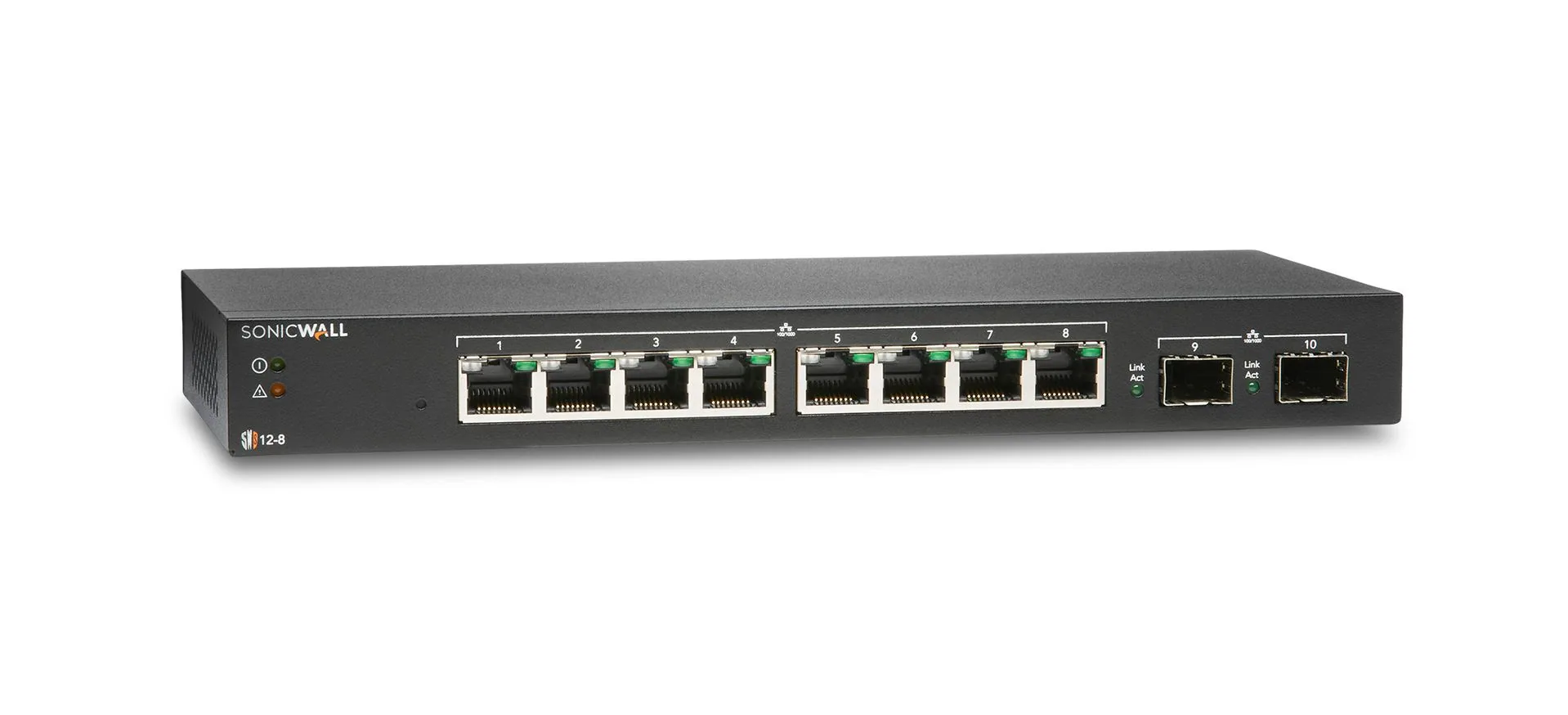
SWS12-8
Eight gigabit ports and two SFP slots in a fanless desktop box, for a small office that wants its switch managed from the firewall.
8 x 1GbE2 x 1G SFPFanlessDesktop
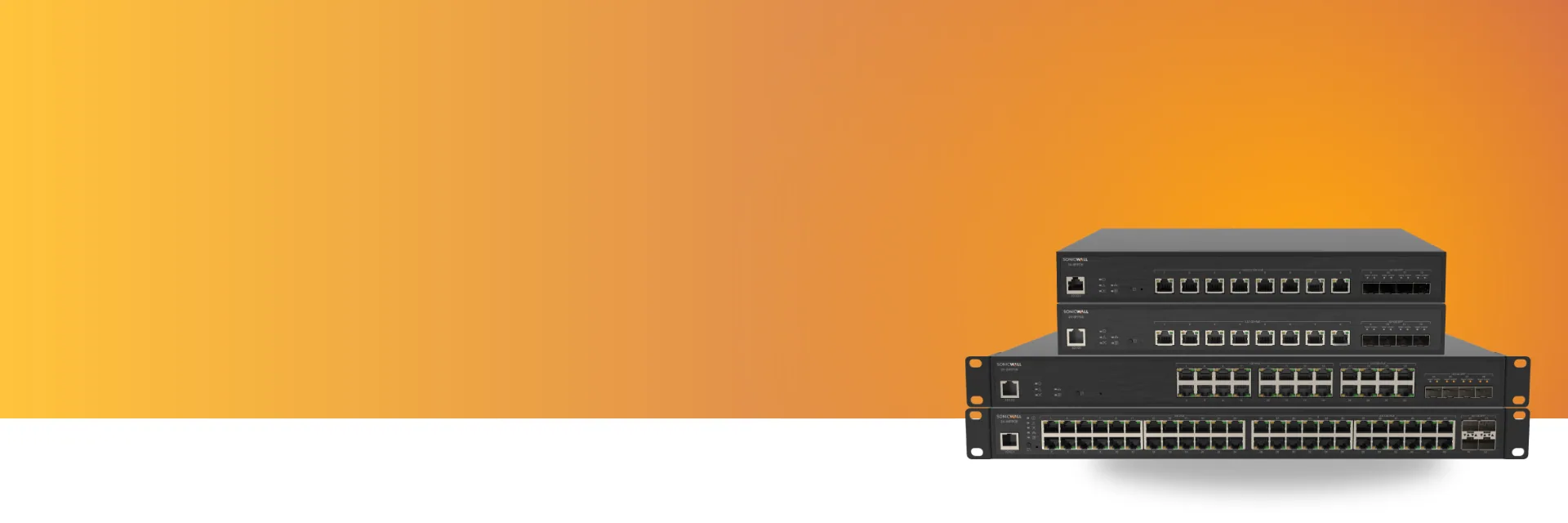
Managed access switches configured from the firewall or from Network Security Manager rather than as separate boxes. Eleven models, from an eight-port fanless desktop unit to 48 PoE ports with 10G uplinks — and two with 802.3bt PoE++ for Wi-Fi 6 access points.
Eight gigabit ports and two SFP slots in a fanless desktop box, for a small office that wants its switch managed from the firewall.
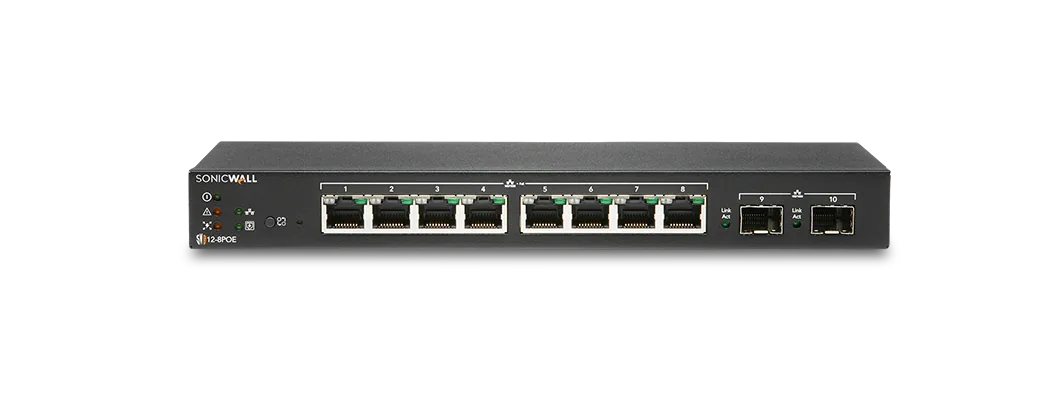
The SWS12-8 with 802.3af PoE on all eight ports and a 55 W budget — enough for a handful of phones or a couple of access points.
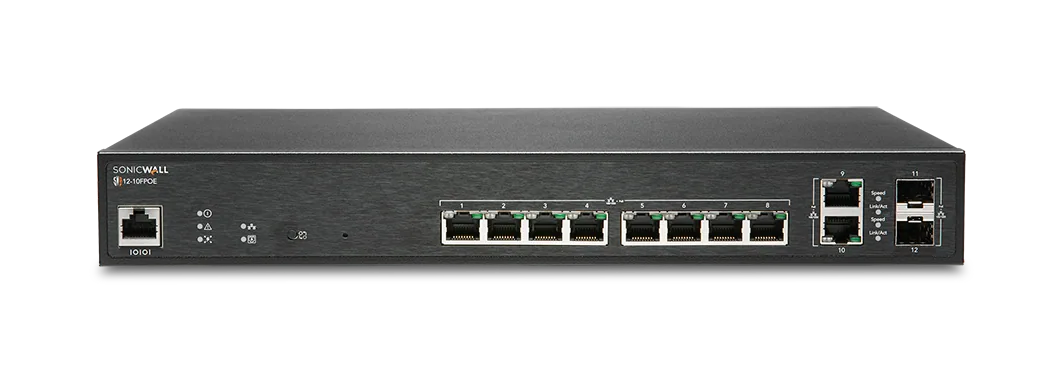
Ten gigabit ports with full 802.3af/at PoE and a 130 W budget — the smallest switch here that will run a modern access point.
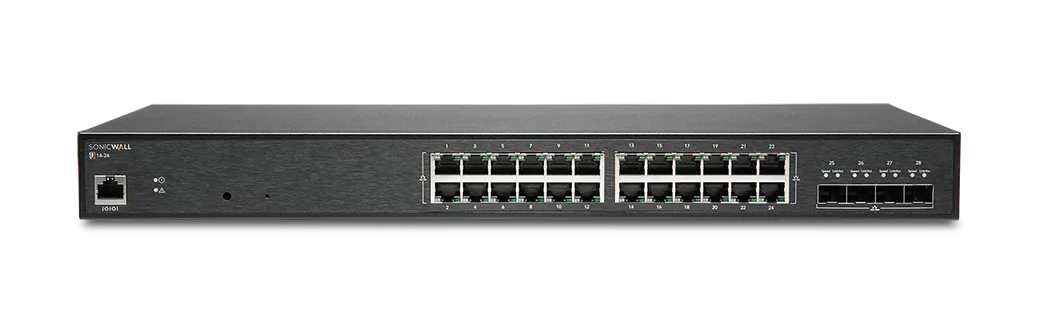
24 gigabit ports and four 10G SFP+ uplinks in 1U, non-PoE — 128 Gbps of switching for 24 W.
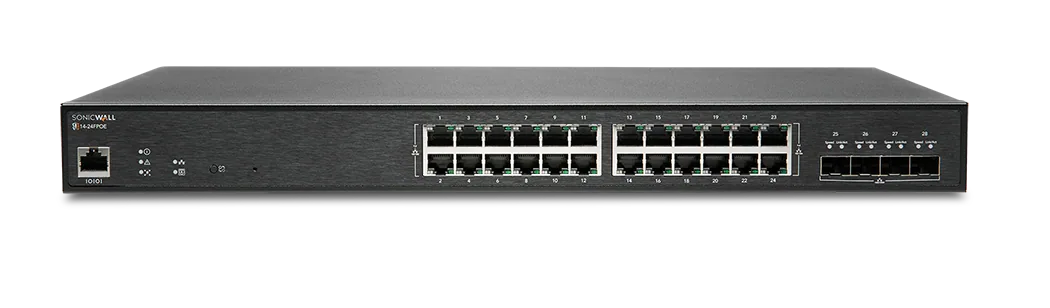
24 gigabit ports with full 802.3af/at PoE and a 410 W budget, plus four 10G SFP+ uplinks.
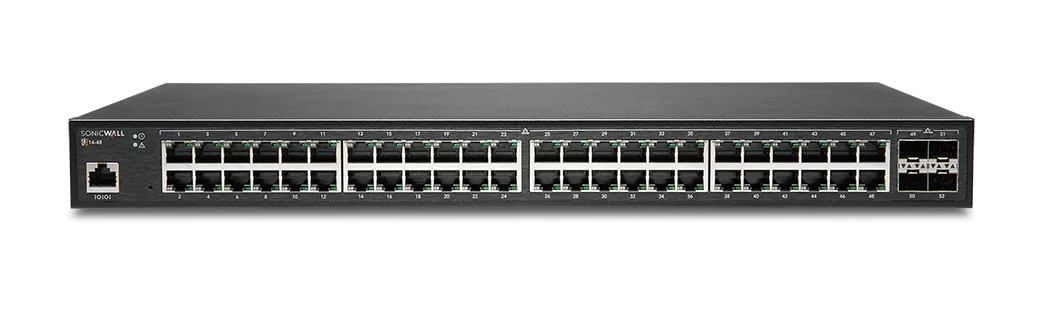
48 gigabit ports and four 10G SFP+ uplinks, non-PoE — 176 Gbps of switching in 1U for 44 W.
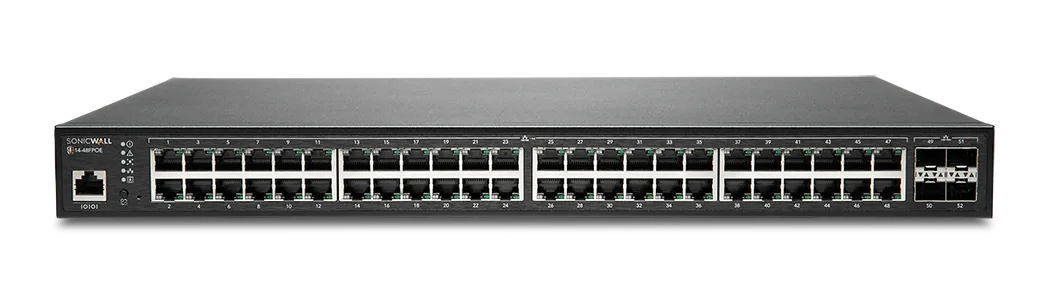
The top of the SWS14 line: 48 gigabit PoE ports, a 740 W budget and four 10G SFP+ uplinks.
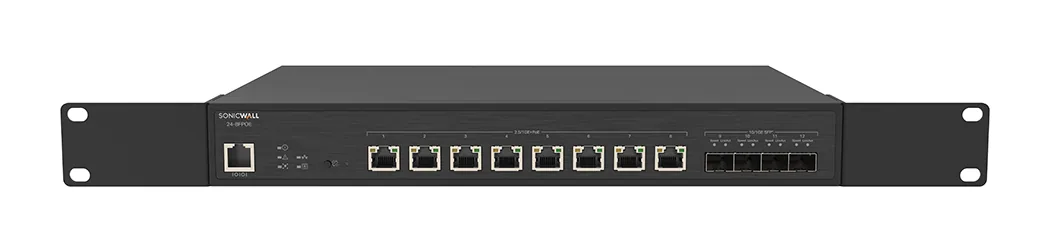
Eight 2.5GbE PoE++ ports at up to 60 W each, with four 10G SFP+ uplinks — built for Wi-Fi 6 and 6E access points.
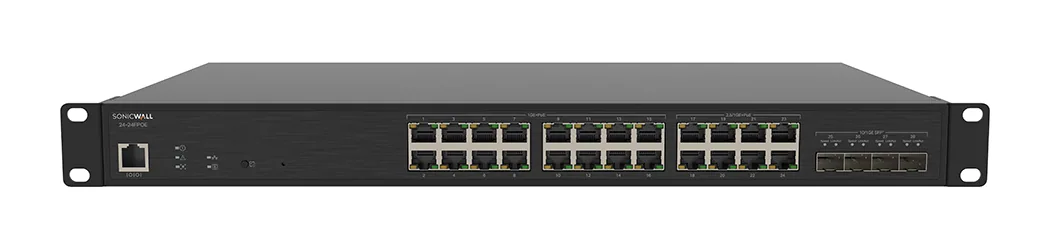
24 PoE ports — eight of them 2.5GbE — with four 10G SFP+ uplinks and a 410 W budget.
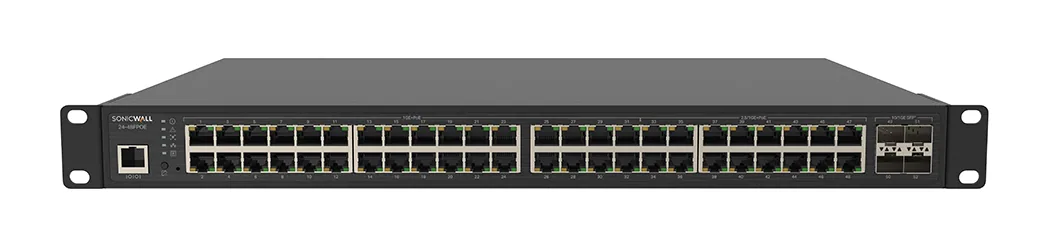
48 PoE ports with sixteen at 2.5GbE, four 10G SFP+ uplinks and a 740 W budget — the largest switch here.
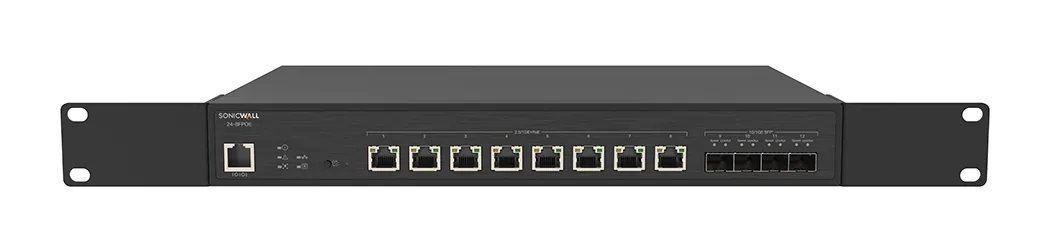
Eight 10GbE copper ports with 802.3bt PoE++ and four 10G SFP+ uplinks — 240 Gbps in a desktop box.
SonicWall’s own introduction to the range — what managing the switch from the firewall actually changes, and where the models differ.
Tell us the port count, how many of them need PoE and what those devices draw, and whether the uplink has to be 10G. We will confirm the model, the PoE budget and the licence term.
Request a Quote