Endpoint Security
- AI-powered NGAV + EDR, one agent
- Ransomware restore + threat hunting
- 24/7 SOC monitoring and response

Unified cybersecurity for better security outcomes
SonicWall is a partner-first unified cybersecurity portfolio that helps SMBs, MSPs and IT teams consolidate network, endpoint, cloud and threat response across hybrid environments to improve visibility, accelerate response and reduce risk.
Grizzly X supplies SonicWall hardware & licensing as a Canadian reseller
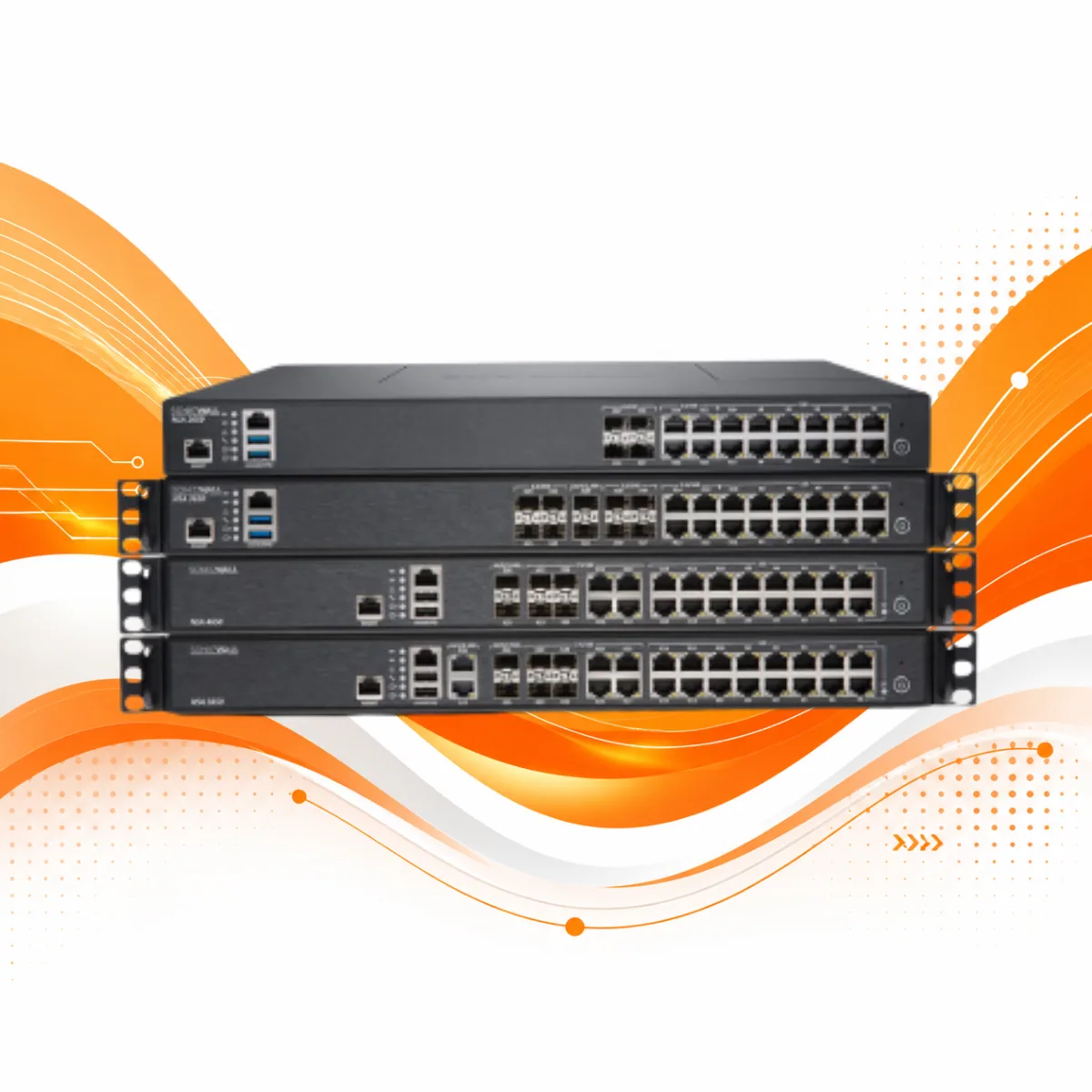
SonicWall worldwide
Pick the products you need, manage everything from one console, and layer on expert management whenever you are ready. All on the same platform.
Security Products
Managed Services
The hard truth
A longer datasheet does not close the gap that actually gets organisations breached. SonicWall publishes these four figures as the case for consolidating and then handing the watching over.
Six core security outcomes
SonicWall orients its product development, partner programme and go-to-market around six outcomes a business can be judged on — not a feature count.
Stop attacks before they become incidents, through security that is correctly configured and continuously monitored.
Shrink the attack surface systematically. Close the known gaps and build resilience that scales with the estate.
Security that keeps the business running. Purpose-built tools keep operations intact under pressure.
Built-in controls and reporting keep you audit-ready without standing up a separate compliance programme.
Consolidate the stack. Fewer vendors, less overhead and better visibility at a lower total cost.
Automated misconfiguration prevention closes the most common attack vectors before they are exploited.
Product lineup
Every SonicWall model we supply, quoted to your deployment — appliance, licence term and support in one place.
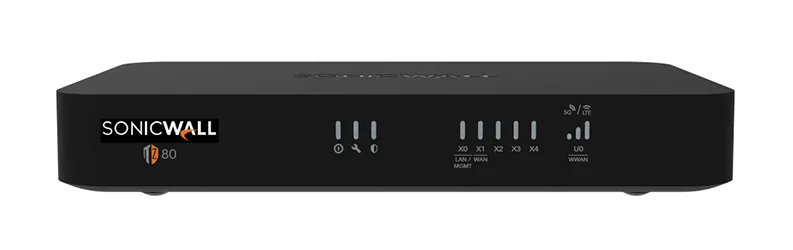
The subscription-based entry model: 750 Mbps across every inspection engine in a palm-sized box, for a home office, a micro-site or an IoT segment.
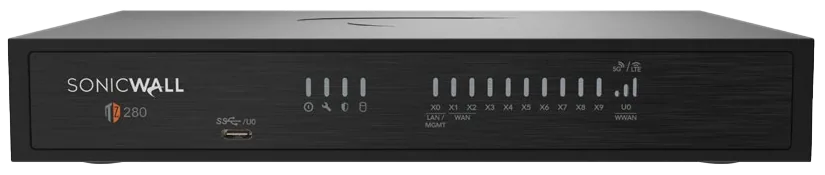
The entry point to Gen 8: 2.5 Gbps of firewall inspection and eight gigabit ports in a fanless desktop unit.
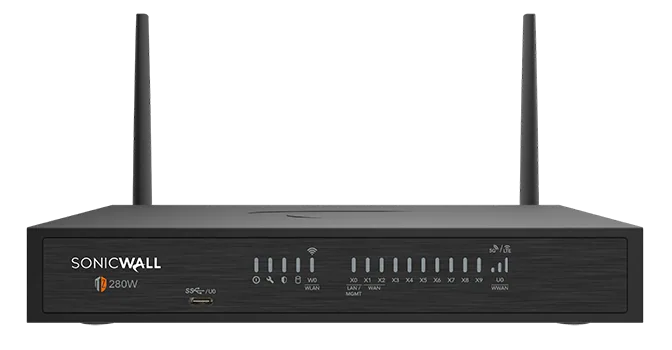
The TZ280 with a 2x2 802.11ax radio built in, for a site that needs wireless without a separate access point.
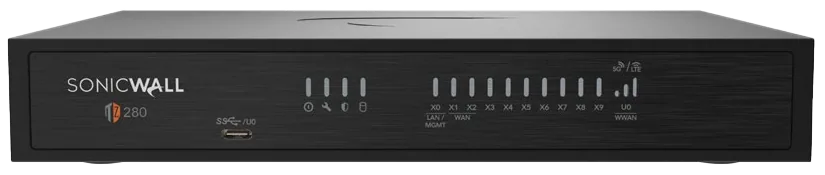
The TZ280 with four PoE+ ports and a 120 W budget, so phones, cameras and access points run off the firewall.

3.5 Gbps of firewall inspection and two 5G/2.5G SFP+ uplinks, for a branch outgrowing gigabit.
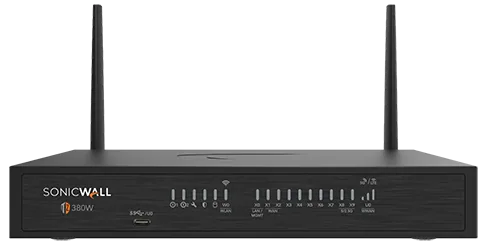
The TZ380 with a 2x2 802.11ax radio built in, keeping the 5G/2.5G SFP+ uplinks.
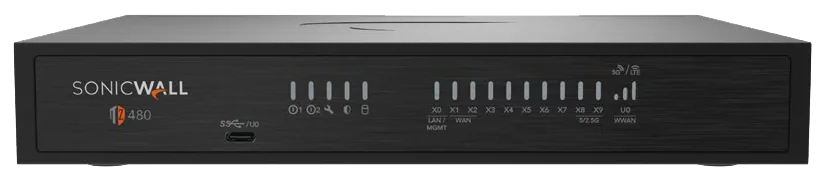
4 Gbps of firewall inspection, 2,500 SAML users and 32 managed access points.
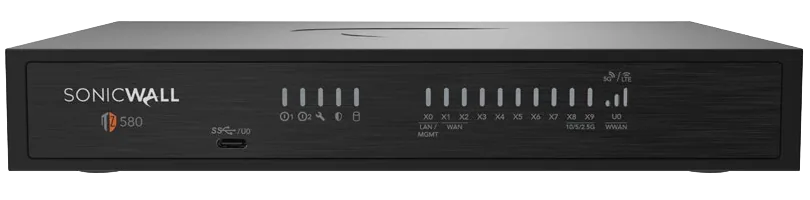
4.5 Gbps of firewall inspection, 500,000 DPI connections and 250 site-to-site tunnels.
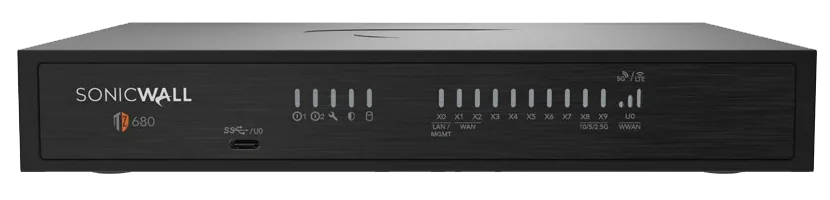
The top of the Gen 8 TZ range: 5 Gbps of firewall inspection and two 10G SFP uplinks.
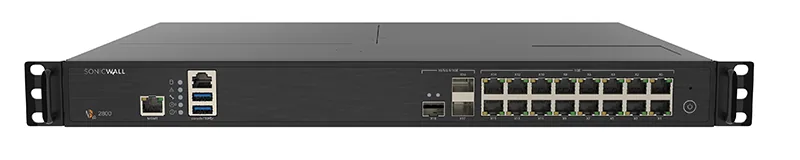
The entry point to the Gen 8 rack range: 8 Gbps of firewall inspection and sixteen gigabit ports in a 1U chassis.
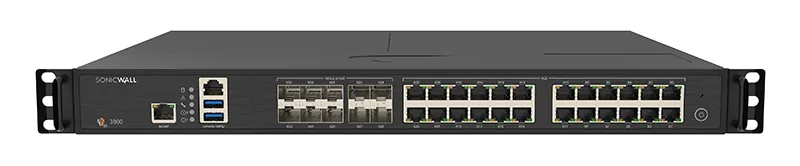
Twenty-four gigabit ports and ten SFP+ cages — the densest copper-and-fibre mix in the range below the 6800.

The first rung with storage expandable to 1 TB and redundant fans: 20 Gbps of firewall inspection for a campus edge.

Thirty gigabits of firewall inspection and 24 Gbps with threat prevention on, for a high-traffic distributed network.

The top of the Gen 8 NSa range: 40G QSFP uplinks, 55 Gbps of firewall inspection and 20 million SPI connections.
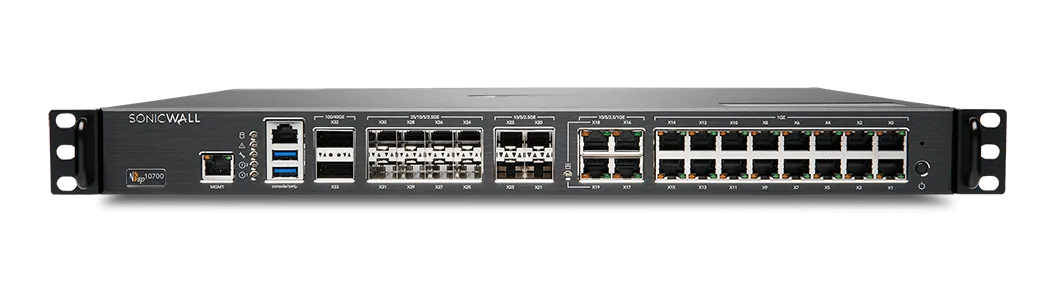
The entry point to the Gen 7 NSsp platform: 42 Gbps of firewall inspection, 100G QSFP28 uplinks and 15 million SPI connections in 1U.
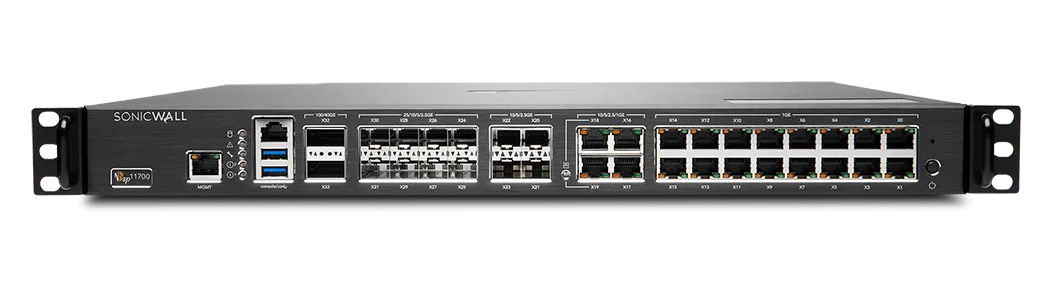
The same 1U chassis as the 10700 with 47 Gbps of firewall inspection, 20 million SPI connections and twice the site-to-site tunnels.
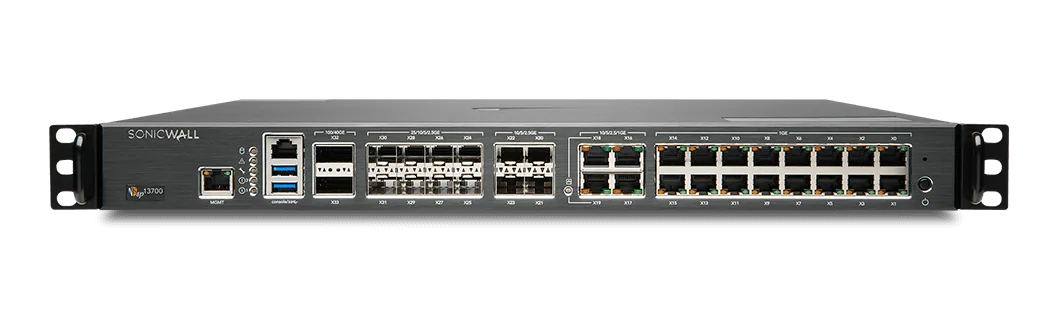
The fastest 1U NSsp: 60 Gbps of firewall inspection, 45.5 Gbps with threat prevention on and 16.5 Gbps of TLS inspection.
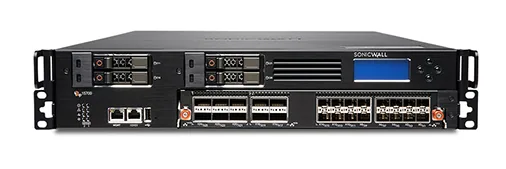
The multi-instance flagship: 105 Gbps of firewall inspection, 80 million SPI connections and up to twelve isolated tenants on one chassis.
The smallest virtual firewall in the range: one vCPU, 2 Gbps of firewall inspection and 2 GB of memory, for a single cloud workload or a small branch.
Two vCPUs and 6 Gbps of firewall inspection, with five times the connection capacity of the XS.
Four vCPUs, 9 Gbps of firewall inspection and 1.5 million connections — the first NSv with four public-cloud interfaces.
The largest virtual firewall: eight vCPUs, 14 Gbps of firewall inspection, 3 million connections and all eight interfaces on public cloud.
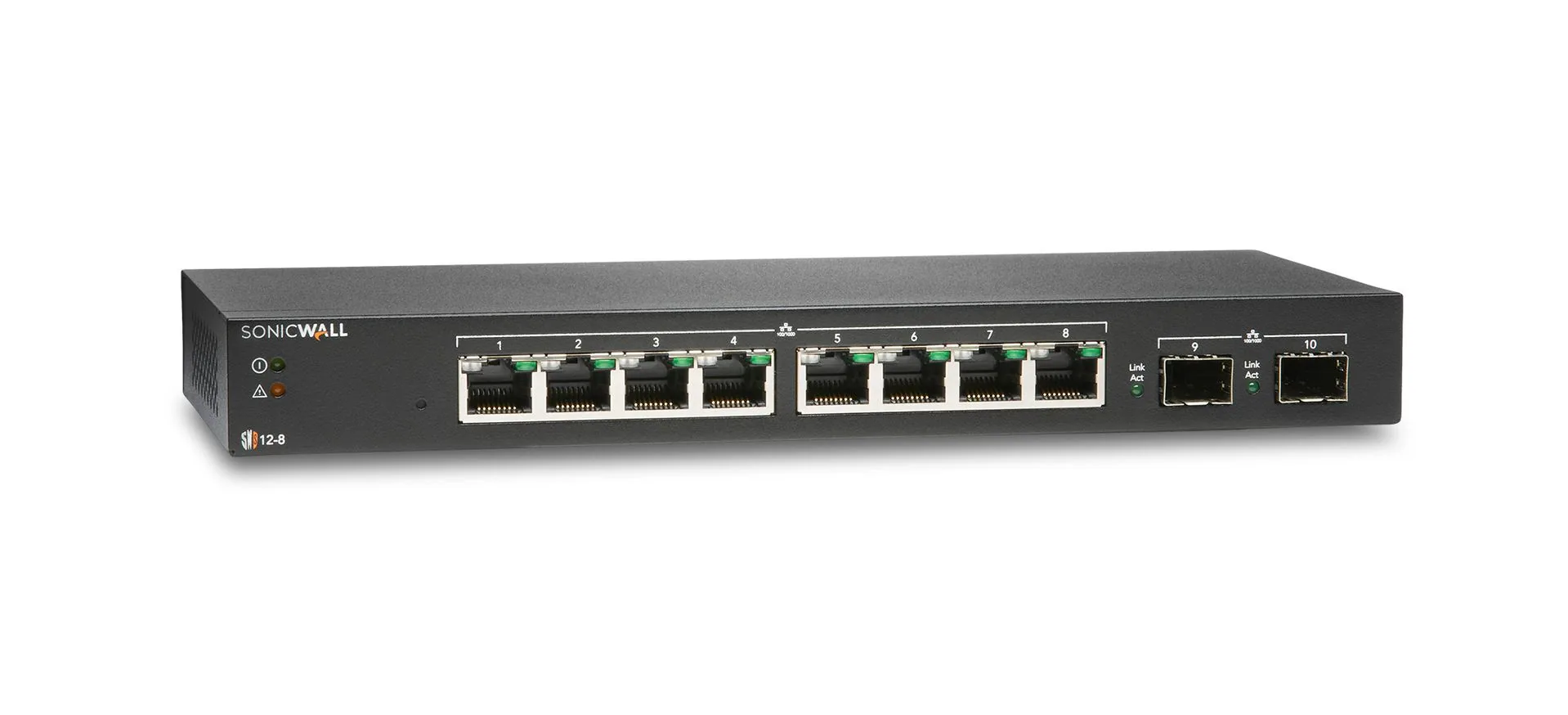
Eight gigabit ports and two SFP slots in a fanless desktop box, for a small office that wants its switch managed from the firewall.
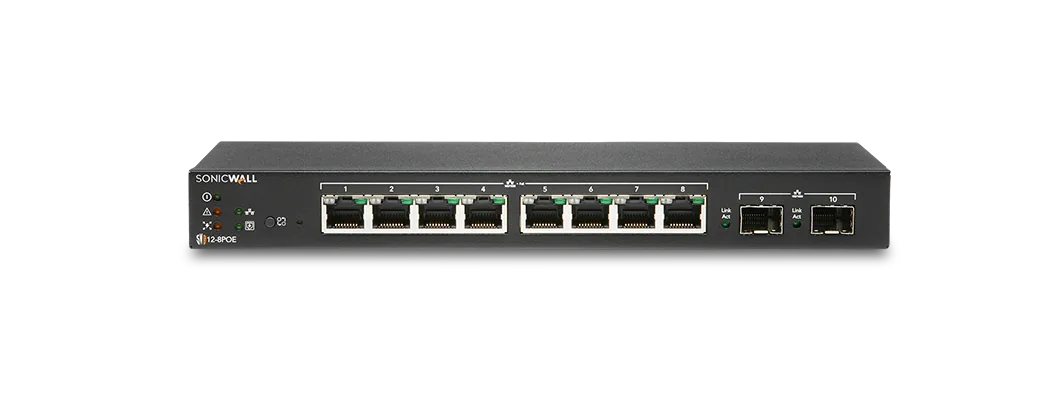
The SWS12-8 with 802.3af PoE on all eight ports and a 55 W budget — enough for a handful of phones or a couple of access points.
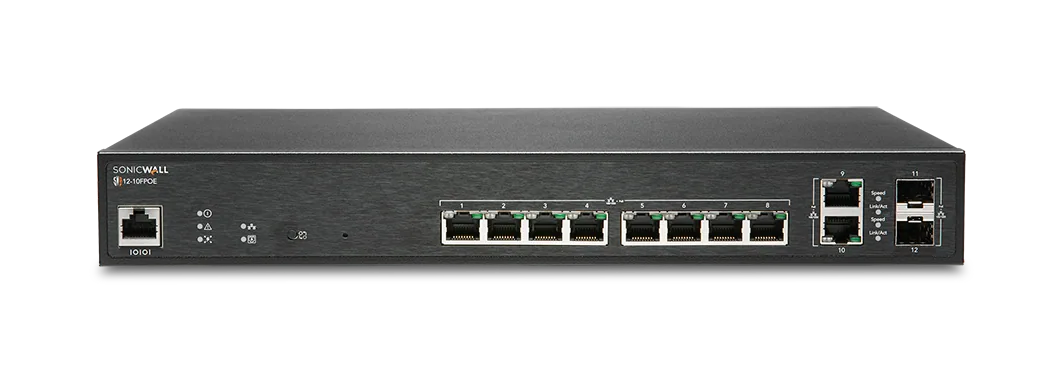
Ten gigabit ports with full 802.3af/at PoE and a 130 W budget — the smallest switch here that will run a modern access point.
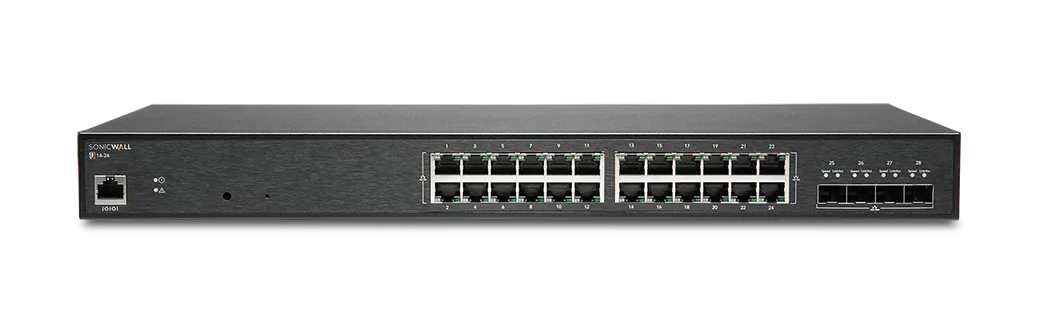
24 gigabit ports and four 10G SFP+ uplinks in 1U, non-PoE — 128 Gbps of switching for 24 W.
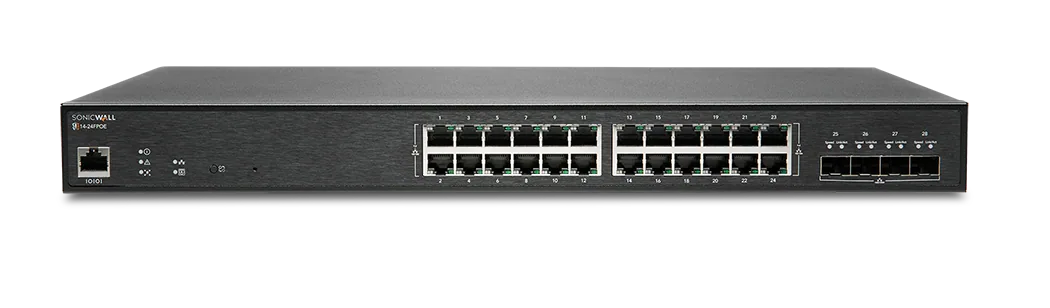
24 gigabit ports with full 802.3af/at PoE and a 410 W budget, plus four 10G SFP+ uplinks.
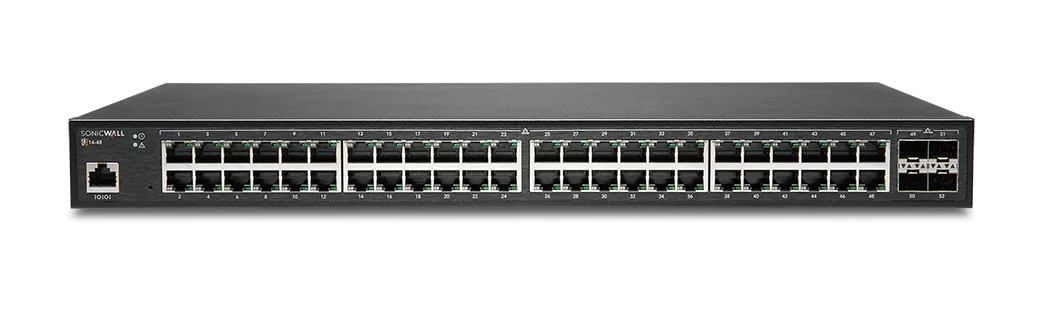
48 gigabit ports and four 10G SFP+ uplinks, non-PoE — 176 Gbps of switching in 1U for 44 W.
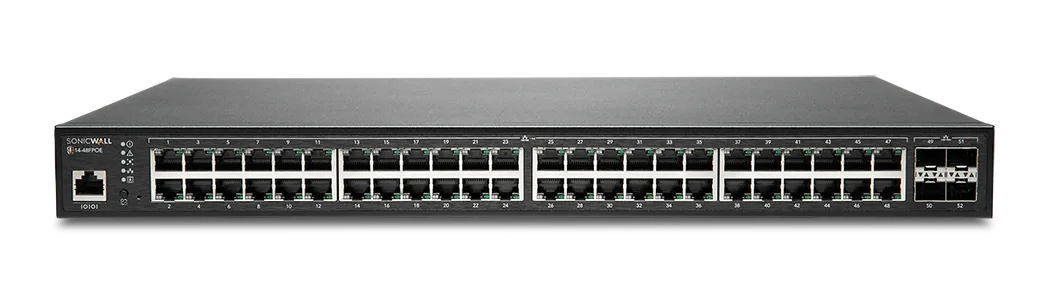
The top of the SWS14 line: 48 gigabit PoE ports, a 740 W budget and four 10G SFP+ uplinks.
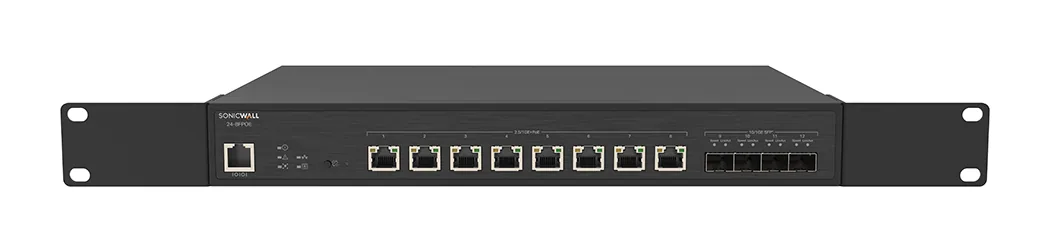
Eight 2.5GbE PoE++ ports at up to 60 W each, with four 10G SFP+ uplinks — built for Wi-Fi 6 and 6E access points.
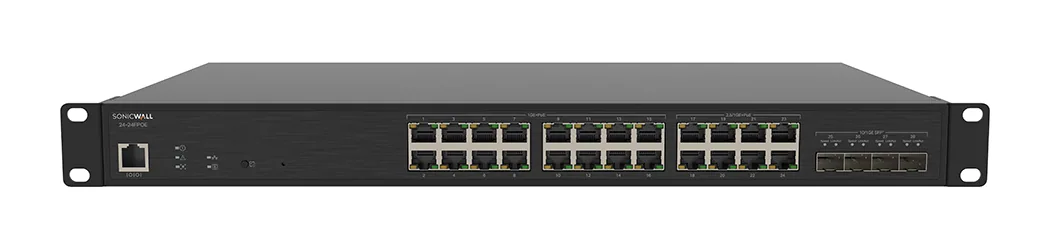
24 PoE ports — eight of them 2.5GbE — with four 10G SFP+ uplinks and a 410 W budget.
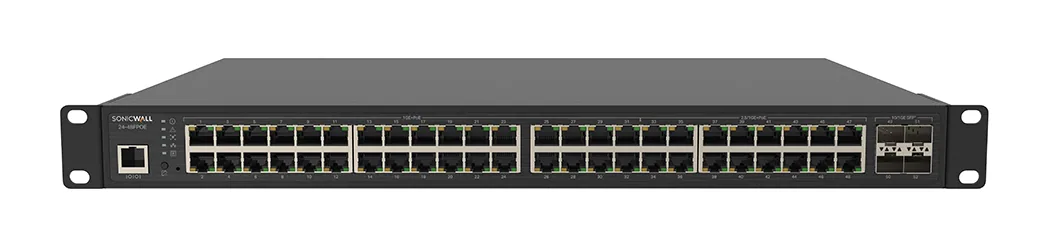
48 PoE ports with sixteen at 2.5GbE, four 10G SFP+ uplinks and a 740 W budget — the largest switch here.
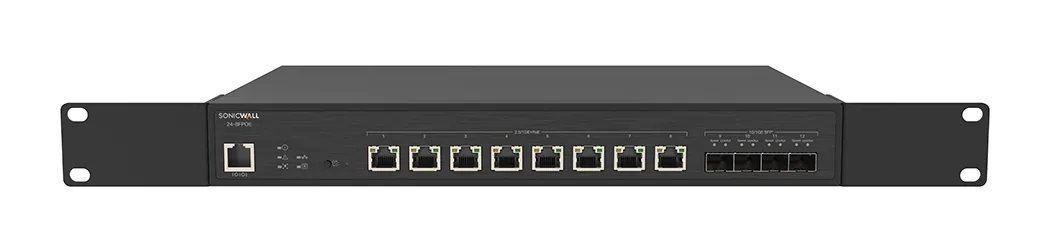
Eight 10GbE copper ports with 802.3bt PoE++ and four 10G SFP+ uplinks — 240 Gbps in a desktop box.
We don't list this category online yet — tell us what you need and we'll quote it.
Tell us your user count, site layout and throughput needs. We will size the appliance, pick the right licensing tier, and come back with a quote — no pricing guesswork, no obligation.
Talk to a specialist